
Harold, 63, spent the better part of two years assuming everyone around him had started mumbling. It was easier to blame noisy restaurants, poorly mixed television audio, and soft-spoken relatives than to consider that his own hearing might be changing. It took his granddaughter asking, twice, why he never answered her, for the idea to finally sink in.
His experience tracks closely with the numbers. The National Institute on Deafness and Other Communication Disorders (NIDCD) estimates that roughly 28.8 million American adults could benefit from wearing a hearing aid — yet fewer than one in six of them actually do.[1]
Cost and access are the obstacles people mention most often. Traditional Medicare has historically excluded hearing aids from coverage, private insurance rarely closes the gap, and for many adults the subject simply stays on the back burner year after year.
“Researchers keep linking untreated hearing loss to broader changes in cognitive health over time, and to the idea that addressing it sooner rather than later may carry real benefits.”
— Summarized from public-health research out of the Johns Hopkins Bloomberg School of Public Health[3]What Untreated Hearing Loss Can Do Over Time
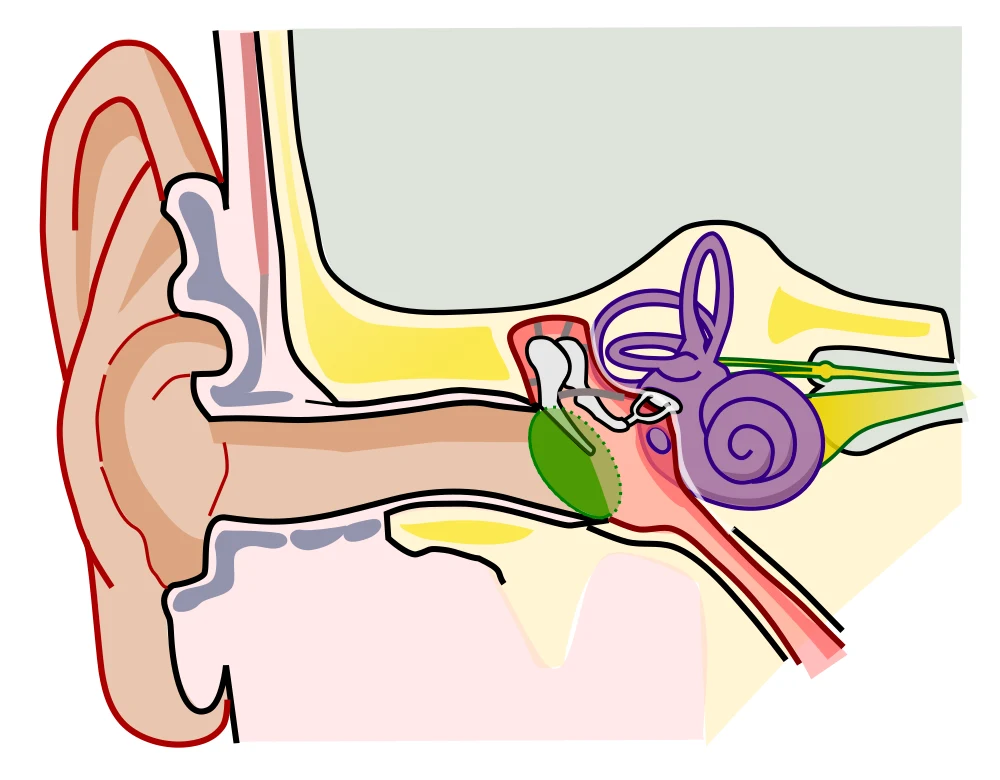
Doctors call the most common form of age-related hearing loss presbycusis. It develops when the tiny hair cells lining the cochlea — the structures responsible for turning sound waves into signals the brain can interpret — gradually wear down. Once that happens, those cells do not come back.
The effects do not always stay contained to hearing. A study in JAMA Internal Medicine tracked older adults over time and found that those with hearing loss experienced faster cognitive change than those with normal hearing, though the study's authors were careful to note that more research is needed before drawing firm conclusions about cause and effect.[3]
A 2014 study published in Otology & Neurotology followed older adults for a decade and found a higher rate of dementia diagnoses among those with hearing loss. The authors point to reduced social engagement and increased mental effort as possible contributing factors.[4]
Observational data like this shows a pattern, not a certainty for any one person — results differ from person to person.Beyond the clinical research, there is a quieter, more everyday cost. People with untreated hearing loss tend to speak up less in conversations, skip get-togethers they would normally enjoy, and slowly drift from the people around them — often without noticing it happening in real time.

Why So Few People Act on It (And What Has Changed)
On average, people wait about seven years after first noticing signs of hearing loss before they do anything about it.[2] Much of that hesitation traces back to cost, and to a sense that the whole subject can wait a little longer. That has started to shift as digital hearing technology has become smaller, more affordable, and easier to set up at home.
In 2022, the FDA created a new category for over-the-counter hearing aids aimed at adults 18 and older with perceived mild to moderate hearing loss, as an additional option alongside traditional hearing care.[5] That regulatory change opened the door to a new wave of devices, and one that has drawn attention is the Nebroo PRO 3.0.
Nebroo PRO 3.0: A Low-Cost Over-the-Counter Option to Consider
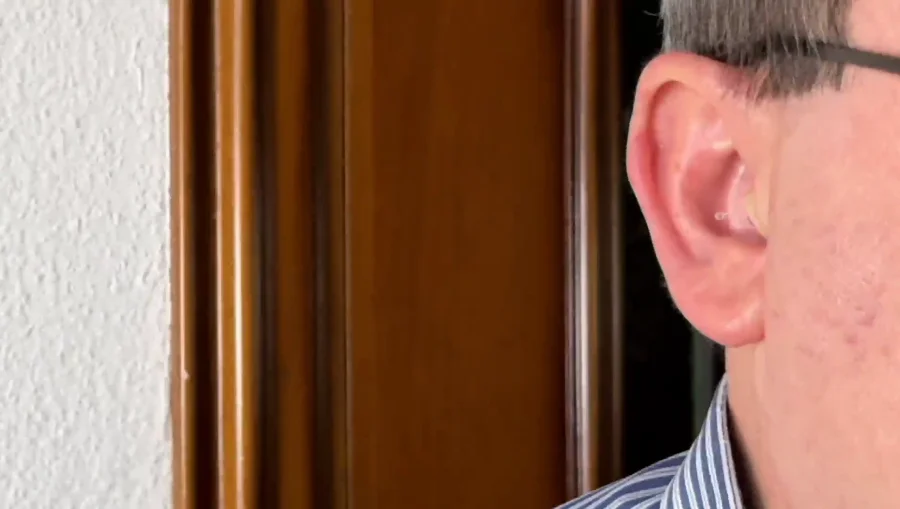
The Nebroo PRO 3.0 is a compact, in-canal hearing device built for adults 18 and older who notice mild to moderate hearing loss, sold under the FDA's over-the-counter hearing aid category as an option alongside professional hearing care.
 Speech-Focused
Processing — built to bring out voices specifically, not just turn everything up
Speech-Focused
Processing — built to bring out voices specifically, not just turn everything up- Sits
Fully in the Ear Canal — close to unnoticeable to people around you
- Up to
19 Hours per Charge — enough for a full day of regular use
- 10
Dome Sizes Included — aimed at getting a comfortable, secure fit
- Background
Noise Reduction — designed to cut down clutter so speech stands out
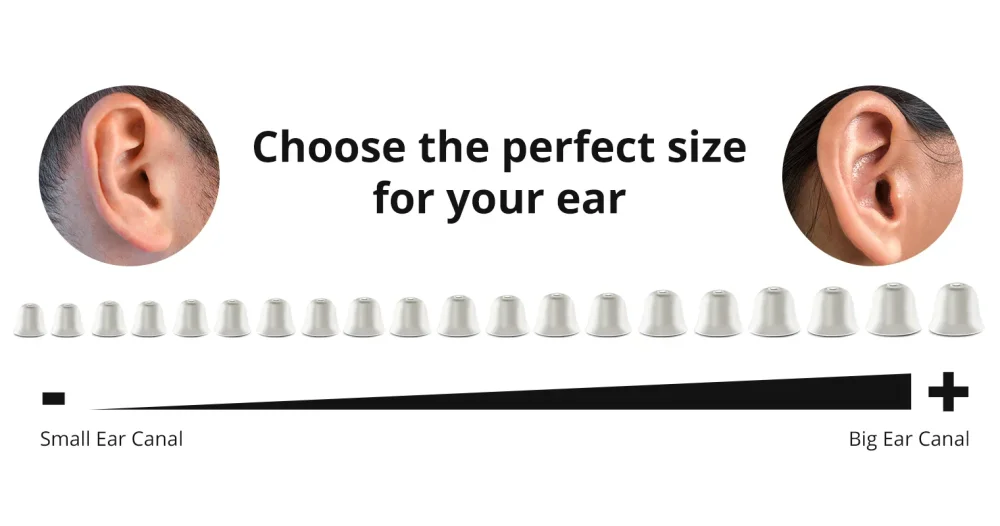
Ten sizes of silicone domes ship in the box so you can find the fit that works for your ear.
🔒 Encrypted checkout · Free shipping · 120-day return window
What Customers Report
*Results vary from person to person. The accounts below reflect feedback shared with the advertiser; photos are of models, not actual customers. Your own experience may differ.

“I had been telling myself for years that people just needed to speak up. My son finally talked me into trying these, and the difference was immediate — I heard the microwave beep from another room for the first time in ages.”

“My husband kept the TV loud enough that I would leave the room. That changed within the first week of wearing these. They are comfortable enough that I forget I have them in by mid-morning.”

“I put off dealing with my hearing for close to a decade because of the price tag a coworker once mentioned. These cost a fraction of that, fit well right out of the box, and I have worn them every day since they arrived.”

120-Day Return Window
Nebroo backs the PRO 3.0 with a full 120-day return period. If it is not the right fit, send it back for a refund.
Want to See if Nebroo PRO 3.0 Fits Your Needs?
The product page linked below includes a short quiz that walks through a few questions about your hearing and shows current pricing based on your answers.
🎯 See the Product Page & Quiz →Available while current stock lasts. Individual results vary.
📚 Scientific References
- National Institute on Deafness and Other Communication Disorders (NIDCD). “Quick Statistics About Hearing.” U.S. Dept. of Health and Human Services. Updated March 2021. nidcd.nih.gov
- Kochkin, S. (2009). “MarkeTrak VIII: 25-Year Trends in the Hearing Health Market.” Hearing Review, 16(11):12–31.
- Lin, F.R., Yaffe, K., Xia, J., et al. (2013). “Hearing Loss and Cognitive Decline in Older Adults.” JAMA Internal Medicine, 173(4):293–299. doi:10.1001/jamainternmed.2013.1868
- Gurgel, R.K., Ward, P.D., Schwartz, S., et al. (2014). “Relationship of Hearing Loss and Dementia: A Prospective, Population-Based Study.” Otology & Neurotology, 35(5):775–781. doi:10.1097/MAO.0000000000000313
- U.S. Food and Drug Administration. (2022). “FDA Issues Landmark Rule Allowing Hearing Aids to Be Sold Over-the-Counter.” FDA News Release, August 16, 2022. fda.gov
- Chien, W., Lin, F.R. (2012). “Prevalence of Hearing Aid Use Among Older Adults in the United States.” Archives of Internal Medicine, 172(3):292–293. doi:10.1001/archinternmed.2011.1408